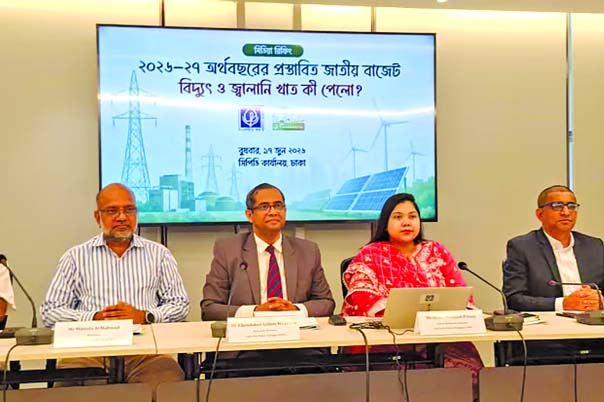
The proposed national budget for FY2026–27 includes several positive initiatives in the power and energy sector, including tax exemptions for solar power generation, incentives for electric vehicle (EV) use, and increased domestic gas exploration efforts, according to the Centre for Policy Dialogue (CPD).
However, the think tank said the sector’s progress should not be assessed merely by allocation figures, but rather in terms of energy security, expansion of renewable energy, reduced dependence on fossil fuels, and long-term policy reforms.
CPD presented its analytical review of the proposed budget at a media briefing in the capital on Wednesday, examining allocations, subsidies, renewable energy expansion, power transmission and distribution infrastructure, and energy transition-related issues.
Subsidy burden remains a major challenge
The power sector has been allocated Tk37,000 crore in the upcoming fiscal year, slightly higher than the revised Tk36,000 crore in the current budget. A large portion of this will go toward covering losses of the Bangladesh Power Development Board (BPDB), which continues to face financial strain due to high-cost electricity purchases from IPPs, rental, and quick rental power plants.
CPD warned that volatility in the international market may increase the need for additional subsidies in LNG and fuel oil imports. However, CPD opposed passing this burden onto consumers through electricity price hikes, arguing instead for a gradual reduction in capacity payments and rationalisation of generation costs.
Strong solar incentives, but limited allocation
The proposed budget introduces a 0% tax rate for the solar power sector until 2035 for the first time, along with a 5% tax rebate on solar electricity bill payments, reduced import duties on solar equipment, and lower taxes on related components.
CPD said these measures send a positive signal for renewable energy. However, only about 2% of total development allocation in power generation goes to renewable energy, while 98% still goes to fossil fuel-based projects.
The think tank warned that Bangladesh’s target of producing 10 GW of solar power by 2030 may be difficult to achieve under the current investment trend.
Several renewable projects remain stalled
CPD noted that at least 11 renewable energy projects were not approved in the current fiscal year, including seven solar projects with a combined capacity of around 640 MW, three grid modernisation projects, and one battery storage project.
It said renewable energy expansion cannot rely solely on the private sector and called for larger government-led solar projects alongside increased allocation in the development budget.
Continued support for fossil fuels
While solar incentives were introduced, CPD said existing fiscal support for LNG and coal remains unchanged, including VAT exemptions on LNG imports and extended duty benefits on coal imports until 2030.
The budget also emphasized the development of coalfields such as Barapukuria and Dighipara and increased domestic coal extraction, which CPD said could undermine the energy transition agenda.
Grid modernization remains a bottleneck
CPD identified transmission and distribution infrastructure as a key weakness in the power sector. It noted that import duties ranging from 60 to 93% still apply to essential grid equipment such as transformers, conductors, towers, and meters, raising infrastructure costs and slowing modernisation.