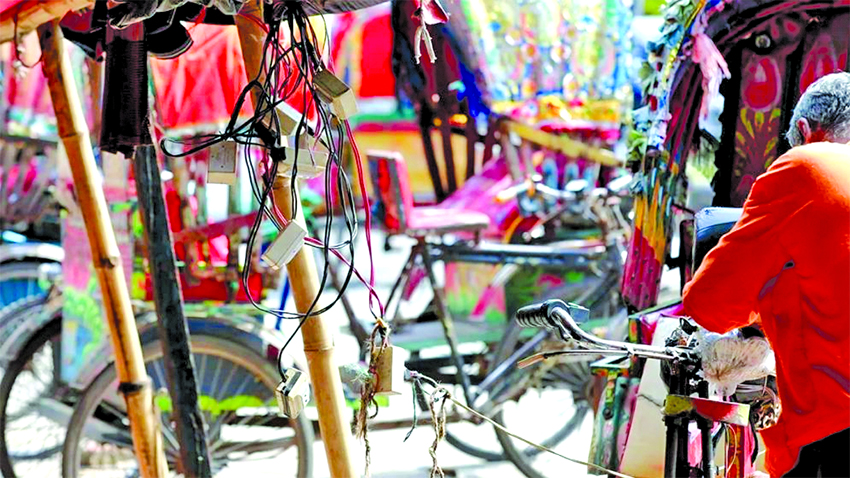
Unauthorised battery-charging businesses for auto-rickshaws are operating openly in busy areas of Dhaka, with operators allegedly taking direct connections from electricity mainlines to charge rows of vehicles in garages and on roadsides.
Drivers are charged a fixed fee for each vehicle, while most of these charging points reportedly operate without approval. Although authorities occasionally conduct drives to disconnect illegal connections, the businesses often resume operations within days.
In Tejgaon, direct connections were found running from a mainline to the batteries of electric rickshaws. The garage owner declined to comment despite the charging operation taking place openly and left the premises after noticing the presence of a camera.
A similar scene was found at the end of a narrow lane in a residential area of Mohammadpur. Around 30 electric rickshaws were being charged at a tin-roofed garage using electricity from a residential connection.
Those involved claimed they were using electricity in accordance with regulations. However, they could not provide a satisfactory explanation as to whether charging dozens of rickshaws commercially through a residential meter was permitted.
According to data from the Centre for Policy Dialogue (CPD), Bangladesh has around 4 million electric rickshaws, with approximately 1.5 million operating in the capital.
The Dhaka Metropolitan Police (DMP) says there are around 48,136 illegal charging points and 992 garages across the capital's eight crime divisions. The number is increasing day by day, according to the authorities.
CPD estimates that around 5% of the country's total daily electricity generation — approximately 750 megawatts — is used to charge electric-rickshaw batteries. A significant portion of this electricity is allegedly consumed through illegal connections.
Mohammad Khalid Mahmud, a programme assistant at the CPD, said illegal electricity use was depriving the government of revenue while also contributing to wastage and public inconvenience.
“Illegal electricity connections are causing the government to lose revenue. At the same time, they are increasing electricity wastage and public suffering,” he said.
Transport expert Professor Dr Md Hadiuzzaman said consumers were suffering in various ways because of direct connections taken from mains lines.
“Some are also using electricity from lines meant for residential use to run this illegal business,” he said.