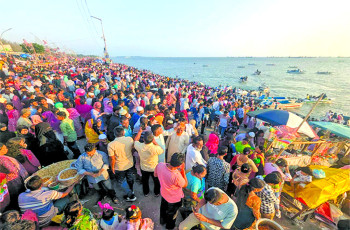
On one side lies the azure expanse of the Bay of Bengal and on the other, a verdant stretch of hills. Crystal-clear streams cascade down hillsides, tranquil lakes nestle at the foot of mountains, and rhythmic waves wash over long stretches of sandy beaches.
The region is also home to centuries-old structures, religious heritage sites, Liberation War memorials, the distinctive cultures of ethnic communities and lush green tea gardens. Just beyond the bustle of the city, nature appears in an entirely different form.
All these natural and cultural attractions have given Chattogram immense tourism potential. Stakeholders believe that well-planned initiatives to harness the region's diverse attractions could open new avenues of economic opportunity and contribute to the national economy.
World Tourism Day was observed on September 27 with the theme "Tourism of the Future: Digital Transformation and Artificial Intelligence". The theme highlights the growing role of technology, particularly artificial intelligence and digital transformation, in developing the tourism sector.
To mark the day, the Ministry of Civil Aviation and Tourism and the Bangladesh Tourism Board have organized a week-long programme. The Chattogram District Administration also arranged a rally and a discussion meeting.
Tourism stakeholders said Chattogram, long known as the country's port city and a key contributor to the national economy, also has enormous potential as a tourism destination.
Its combination of beaches, hills, waterfalls, forests, lakes, islands, tea gardens, historical landmarks and religious heritage sites offers a diverse range of attractions.
Popular destinations including Patenga, Foy's Lake, Bhatiary Lake, Batali Hill, Banshkhali Eco-park, Mahamaya Lake, Khoiyachora Waterfall, Banshbaria, Guliakhali and Parki Beach have already attracted large numbers of domestic and foreign tourists.
Stakeholders said the next step should be an integrated drive for digital transformation, including the use of artificial intelligence and other modern technologies to improve tourism services and promote destinations.
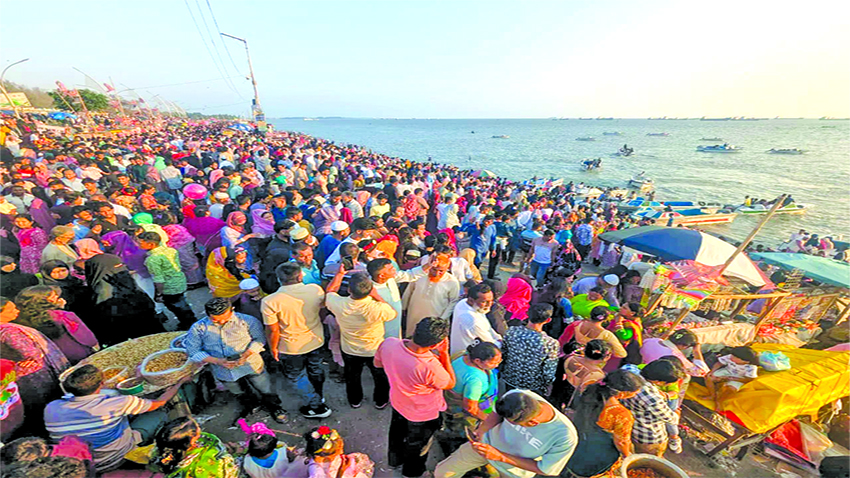
Travel enthusiasts said tourism has given Chattogram a unique appeal. From Patenga Beach, visitors can enjoy the vast sea on one side and the bustling port city on the other. At sunset, the changing colours of the sky are reflected on the waves.
The nearby Karnaphuli estuary, where ships move against the backdrop of the river meeting the sea, further enhances Patenga's appeal, making it a place where the city's urban landscape meets nature.
Beyond Patenga, the Chattogram coastline offers several other beaches, each with its own character, including Parki in Anwara, Banshbaria and Guliakhali in Sitakunda, Banshkhali Beach and Khejur-tala.
The region also offers opportunities for adventure tourism, with numerous waterfalls hidden among its hills and forests.
Sajjatul Islam Tuhin, director of tour operator "Cholo Chattogram Dekhi", told BSS that nature has generously blessed Chattogram with diverse attractions and that its tourism potential extends far beyond conventional destinations.
He pointed to the tea gardens in Banshkhali and Rangunia, saying that with proper management, the areas could be developed as destinations for agro-tourism and nature-based tourism instead of serving solely as production sites.
He said appropriate initiatives could also link tourism with tea estates and rural life, creating new opportunities for local communities. The trails through Chunati Wildlife Sanctuary, Hazarikhil Sanctuary and the Baraiyadhala region also have significant potential for nature-based tourism, Tuhin said.
He said such initiatives could help combine biodiversity conservation with tourism development, an approach that is gaining increasing recognition internationally.
In this regard, the UN tourism agency has identified several key elements of sustainable rural tourism, including nature conservation, local community participation, infrastructure and connectivity, local products and stronger links between tourism and the local economy.
Stakeholders said Chattogram has considerable scope to expand its tourism industry.
As the country's commercial capital, the city is strategically located between the three Hill Tracts districts -- Khagrachhari, Rangamati and Bandarban and the major tourist destination of Cox's Bazar.
Several sites in the city and its surrounding areas could attract domestic and international tourists as well as history enthusiasts.
These include the Ethnological Museum in Agrabad, the Zia Memorial Museum housed in the former Circuit House, the new Circuit House, the century-old Court Building and administrative offices on Court Hill, the Railway CRB Building, which once served as the headquarters of the Assam Bengal Railway, and the long Marine Drive stretching from Faujdarhat to Patenga.
Rashidul Hasan Emon, president of the Tour Operator Association of Chattogram (TOAC) and proprietor of Go-Trip, told BSS that people's interest in travelling has increased significantly in recent years.
"People once travelled mainly during specific seasons, but now they travel throughout the year whenever they find the time and opportunity," he said.
He said the growing interest has contributed to steady expansion in demand for tourism services.
According to Emon, 18 tour operators under the association in Chattogram provide services to tourists travelling to destinations across the country.
He said a new trend has also emerged among Chattogram residents, with many people now opting for day-long tours to destinations close to the city.