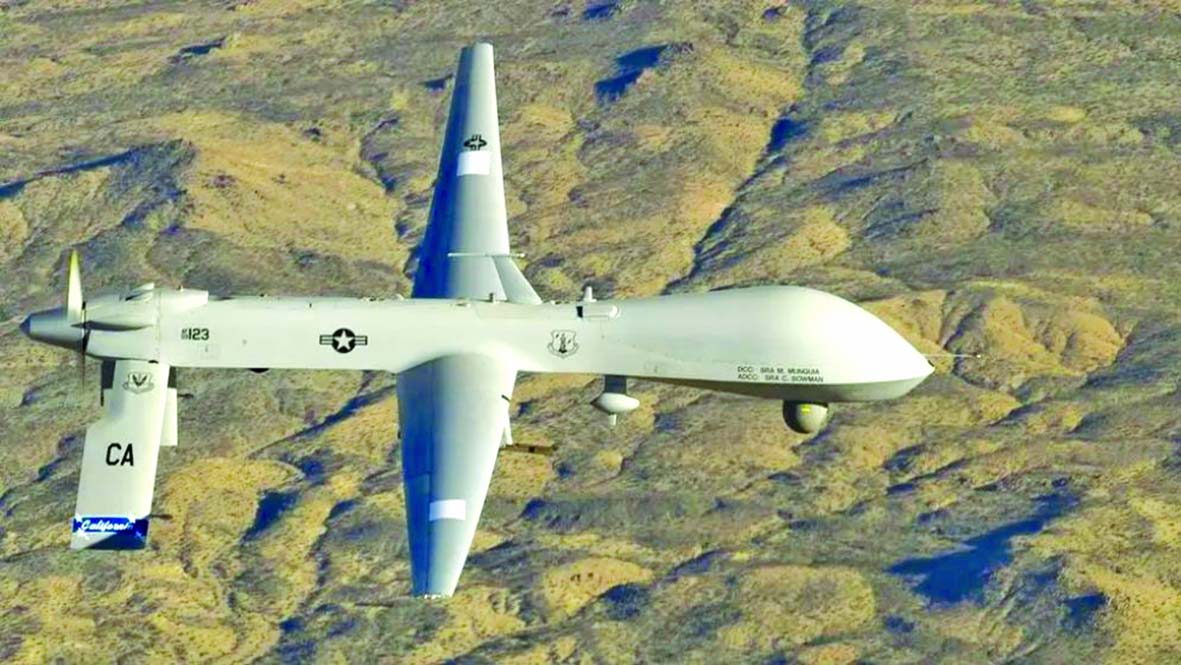
The growing use of drones is rapidly transforming the military strategies of India and Pakistan, particularly after the four-day military confrontation between the two nuclear-armed neighbours in May 2025, which analysts described as the region’s first major “drone war.”
The conflict followed India’s “Operation Sindur,” launched after a deadly 22 April 2025 attack in Pahalgam in Indian-administered Kashmir that killed 26 tourists and one local resident.
India blamed Pakistan-based armed groups for the attack, an allegation Islamabad denied.
During the 7-10 May confrontation, both countries deployed advanced unmanned aerial systems, including loitering munitions, swarm drones and surveillance drones. Military analysts say the conflict marked a significant shift in South Asian warfare tactics, BBC Bangla reported.
Indian forces reportedly used loitering munitions alongside cruise missiles to target Pakistani radar systems, while Pakistan responded with swarm drone operations against Indian positions.
Senior Indian military officials have since acknowledged the growing challenge posed by drone warfare. India is now working on a nationwide counter-drone policy in coordination with other ministries.
According to Indian government data, 1,816 drones were detected along the 3,323-kilometre India-Pakistan border between November 2024 and October 2025. India’s Border Security Force alleged that drones were increasingly being used for smuggling weapons, ammunition and narcotics across the border.
Military officials from both countries say drones are becoming central not only in conventional conflicts but also in counterterrorism operations due to their precision and lower collateral damage.
India has strengthened its air defence systems using kinetic interceptors, electronic warfare jammers and anti-aircraft guns to counter drone threats. However, officials say the high cost of intercepting low-cost drones remains a major concern.
Pakistan has also claimed success in neutralising drone attacks through both kinetic and non-kinetic defence systems. Security analyst Syed Muhammad Ali said Pakistan had developed countermeasures against Israeli-made Heron drones used by India.
The rapid expansion of drone warfare has triggered increased military investment on both sides. According to the Stockholm International Peace Research Institute (SIPRI), India spent about USD$92.1 billion on defence in 2025, making it the world’s fifth-largest military spender, while Pakistan spent around $11.9 billion.
India continues to rely heavily on Israeli drone technology, including Heron and Searcher surveillance drones, while also pursuing deals with the United States to acquire MQ-9B high-altitude long-endurance drones.
Pakistan, meanwhile, has expanded its fleet with Turkish and Chinese-made armed drones, including Bayraktar TB2, Wing Loong-II and Akinci systems. Islamabad is also developing indigenous drone platforms such as the Shahpar series.
Experts say both countries are now integrating drone warfare more deeply into military planning, training and battlefield operations. India is working on AI-controlled swarm drones and training frontline troops in drone operations, while Pakistan is incorporating drones into its operational doctrine and counter-drone systems.
Despite the growing importance of drone warfare, analysts caution against viewing drones as a complete game changer. Experts argue that while drones improve surveillance and tactical flexibility, political leadership and diplomacy will remain critical to maintaining regional stability between the two nuclear powers.