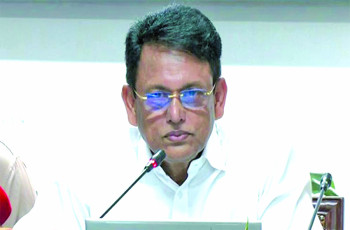
Economist Dr Debapriya Bhattacharya has described the proposed FY2026-27 national budget as “thoughtful” in terms of policy direction but criticised its underlying fiscal and macroeconomic framework as weak, warning that the budget's success will ultimately depend on effective implementation and credible economic management.
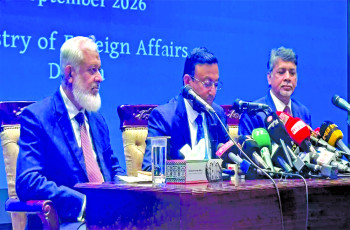
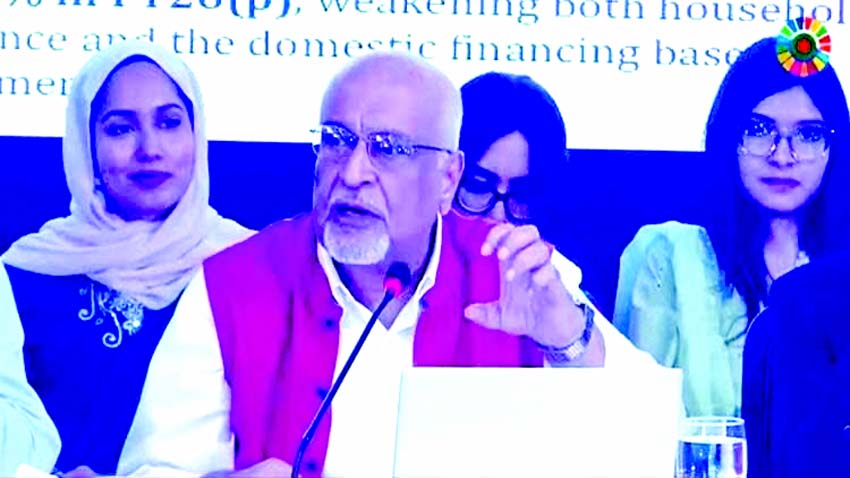
Speaking at a media briefing on “National Budget 2026–27: What Is There for the Disadvantaged?” in Dhaka on Monday, the distinguished fellow of the Centre for Policy Dialogue (CPD) said the government's policy intentions appeared well-considered, but the budget had been built on a weak and potentially ineffective financial framework.
He, however, has welcomed the policy direction of the proposed FY2026-27 national budget, describing it as “thoughtful,” but raised serious concerns over its fiscal credibility, macroeconomic assumptions and implementation capacity, warning that the budget risks repeating some of the shortcomings of previous administrations.
“The policy framework around the budget is broadly thoughtful. However, the problem begins immediately afterwards, because this framework has been placed on top of a very weak, and possibly ineffective, fiscal structure,” he said.
The briefing was organised by the Citizens’ Platform for SDGs, Bangladesh, while CPD Distinguished Fellow Dr. Mustafizur Rahman moderated the session.
Debapriya argued that the medium-term macroeconomic framework supporting the budget was equally fragile, undermining the credibility of key projections relating to growth, revenue mobilisation and public expenditure.
According to him, many of the estimates used in the budget were based on outdated information rather than the latest economic data, raising concerns about the accuracy of official forecasts.
He alleged that there had been instances of incomplete data use, insufficient attention to economic realities and, in some cases, attempts to present economic indicators in a more favourable light.
“If data are manipulated or selectively presented, it becomes a serious concern. Previous governments were criticised for overstating economic growth, understating inflation and failing to properly assess the impact of development projects. It would be unfortunate if the current government follows the same path,” he said.
The economist called on the government to revise all major projections and targets by July 30 using updated economic data to ensure greater accuracy and policy effectiveness.
Identifying implementation as the most critical challenge facing the proposed budget, Dr. Bhattacharya stressed that announcing ambitious programmes alone would not deliver results without strong institutional capacity, transparency and public accountability.
“Presenting the budget is not the end of the government's responsibility. Continuous public scrutiny and pressure are essential to ensure proper implementation,” he said. He also urged the government to reactivate provisions under the Public Money and Budget Management Act that require the finance minister to present regular updates to parliament on economic conditions and budget implementation.
According to him, quarterly economic statements would improve transparency and allow policymakers to respond more effectively to changing economic circumstances.
Debapriya questioned the government's revenue collection targets, arguing that successive administrations have routinely set ambitious goals without introducing the institutional reforms necessary to achieve them.
He said the burden of meeting unrealistic targets often falls on the National Board of Revenue (NBR), despite longstanding weaknesses in tax administration and governance. “Without strengthening institutional capacity, reforming tax administration and ensuring good governance, placing additional pressure on the NBR is not a realistic strategy,” he said.
The economist warned that revenue shortfalls could leave the government with limited room for fiscal adjustment. He noted that reducing salaries of public employees or cutting debt servicing obligations would be difficult, meaning subsidy reductions could become the most likely option.
“Ultimately, ordinary citizens would bear the cost if subsidies are cut to compensate for revenue shortfalls,” he said. While acknowledging the importance of subsidy programmes, Debapriya argued that government support should be more carefully targeted.
He said individuals capable of paying market prices should not receive subsidies, while assistance should be expanded for low-income and vulnerable groups.
According to him, reforming the subsidy system is essential to ensuring more efficient use of public resources and better protection for disadvantaged communities. The economist also questioned the government's three-year economic roadmap based on “Recovery, Restoration and Reconstruction,” describing some of its objectives as overly ambitious.
He argued that expecting the economy to fully recover within the first year could create unrealistic expectations and place unnecessary pressure on policymakers.
Debapriya warned that failure to contain inflation ahead of the next election cycle could overshadow many of the government's achievements.
Highlighting the economic challenges faced by ordinary households, he said many lower- and middle-income families are currently experiencing a “triple burden” of inflation, stagnant wages and declining savings.
“Many people are now being forced to dip into their savings simply to meet daily expenses,” he said.
While welcoming increased budget allocations for health, education and social protection, he expressed concern over large block allocations, arguing that such provisions could create risks for fiscal discipline if not properly monitored.
Debapriya also raised concerns over the government's plan to borrow around $9.5 billion from international lenders, including the International Monetary Fund (IMF), World Bank and Asian Development Bank (ADB), to help finance the budget deficit.
He stressed that any conditions attached to those loans should not undermine the interests of marginalised and disadvantaged populations. “If external financing is necessary, it must support the welfare of ordinary people. The terms of such loans should never work against vulnerable citizens,” he said. Concluding his remarks, the economist emphasised that the effectiveness of the FY2026-27 budget would ultimately depend not only on policy intentions but also on credible economic assumptions, institutional reforms and the government's ability to deliver on its commitments.