Bangladesh’s measles outbreak is driving thousands of families into financial distress, with nearly nine in 10 affected households borrowing money for treatment and six in 10 exhausting their savings, according to a joint assessment by the Bangladesh Red Crescent Society and the International Federation of Red Cross and Red Crescent Societies.
The findings show that the crisis is extending far beyond hospital wards, forcing low-income families to absorb treatment, transport, food and testing costs while losing income during prolonged hospital stays.
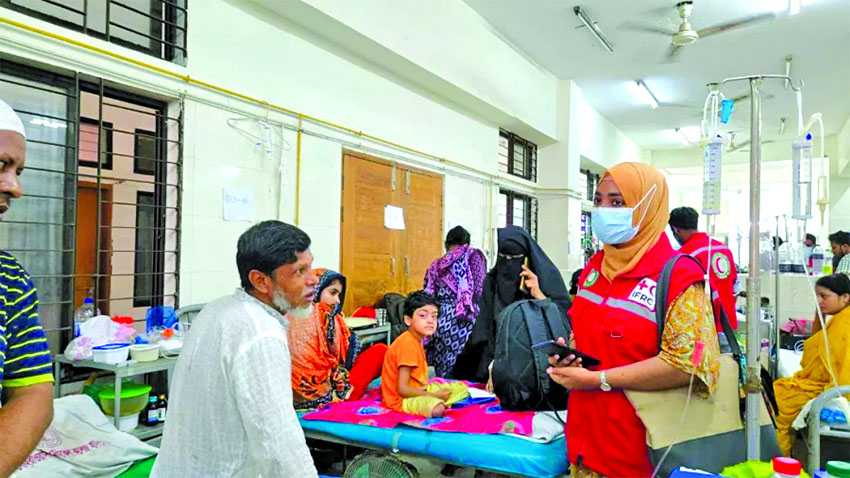
The assessment covered 2,746 measles-affected households receiving care at 12 government medical college and district hospitals across the country. It found that 89% had borrowed money to meet treatment-related expenses, while 61% had depleted their savings.
Every surveyed family said it needed financial assistance.
Medicines were identified as the most urgent need by 35% of households, followed by water, sanitation and hygiene support at 33% and food assistance at 22%.
Around 4% said they had sold assets, while 3% depended on donations.
Families spent an average of Tk16,000 on treatment and related expenses, a significant burden for households already surviving on limited and irregular incomes.
Among respondents who disclosed their occupations, 78% depended on informal work and earned between Tk6,000 and Tk20,000 a month.
For many, the cost of caring for a sick child was compounded by lost wages or job insecurity as caregivers remained in hospital for days or weeks.
Children bore the brunt of the outbreak.
Around 75% of patients covered by the assessment were aged four or below, 19% were between five and 17, and 6% were adults.
The financial pressure was particularly severe for families travelling from outside major cities to seek specialised care.
Hazera Khatun came from Rangpur to Dhaka with her 11-month-old daughter, who is undergoing treatment at Shaheed Suhrawardy Medical College Hospital.
Her family has already spent more than Tk70,000.
“Treatment at the government hospital is free, but many other costs are not covered,” she said.
“We spent nearly Tk20,000 just to reach Dhaka by ambulance. Every day, we have to buy food, pay for medical tests and meet other expenses. I have already borrowed money from relatives.” She said her husband works in Saudi Arabia but had not received his salary that month, worsening the family’s financial crisis.
The assessment was carried out partly to identify the most vulnerable households for emergency cash support.
Of the 2,746 families assessed, 2,400 were selected to receive Tk10,000 each based on agreed vulnerability criteria.
Dr Kabir M Ashraf Alam, secretary general of the Bangladesh Red Crescent Society, said the findings showed that families were confronting a health emergency and an economic shock simultaneously.
“Through our emergency response, we are providing cash assistance to the most vulnerable households while continuing community awareness activities,” he said.
Alberto Bocanegra, IFRC’s head of delegation in Bangladesh, said the consequences of the outbreak stretched well beyond direct medical treatment.
“Families often face serious financial hardship while caring for sick children or other family members,” he said. He said the findings demonstrated the need for humanitarian assistance and stronger social protection during public health emergencies.
With IFRC support, the Bangladesh Red Crescent Society has also assisted the government’s nationwide measles vaccination campaign.
More than 1,000 volunteers have been deployed to conduct community awareness programs, support vaccination centres and promote early treatment-seeking.
The assessment suggests that containing the outbreak will require more than vaccines and hospital care.
Without wider financial protection, thousands of families risk emerging from the measles crisis burdened by debt, depleted savings and lost livelihoods.
SM/CitizenTimes