Bangladesh has taken a fresh initiative to further strengthen bilateral trade and investment relations with New Zealand by expanding cooperation in promising sectors including agri-tech, dairy, green energy, pharmaceuticals, leather, jute, sustainable textiles and information technology.
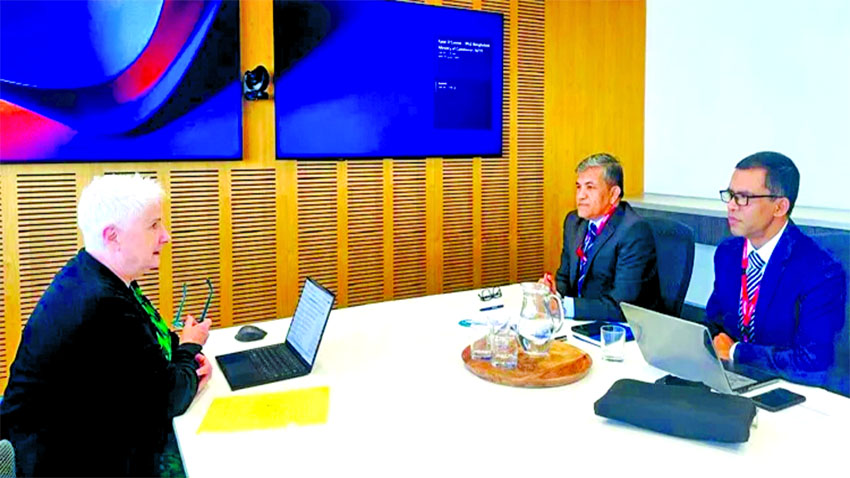
The initiative was discussed at a meeting with New Zealand Trade and Enterprise (NZTE), where Bangladesh highlighted opportunities for joint investment, business-to-business (B2B) linkages and export expansion in these sectors.
Rachel McGuckian, Market Manager for Southeast and East Asia at NZTE, attended the meeting, while Bangladesh Commerce Secretary Md Ataur Rahman led the Bangladesh delegation.
Joint Secretary (FTA) Md Firoz Uddin Ahmed and Deputy Secretary (FTA) Farhana Islam were also present.
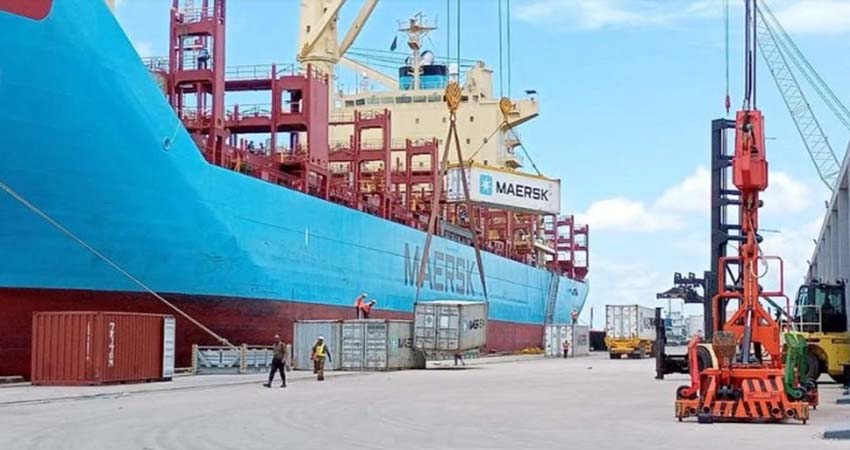
The meeting noted that bilateral trade between Bangladesh and New Zealand currently stands at around US$450 million annually. Dairy products and metal products account for a significant portion of Bangladesh’s imports from New Zealand.
On the other hand, Bangladesh’s exports to New Zealand amount to around US$147 million, with ready-made garments accounting for a major share.
Bangladesh sought NZTE’s cooperation in expanding its non-RMG exports to New Zealand to make bilateral trade more balanced and diversified, said a Commerce Ministry press release.
Particular emphasis was placed on creating new market opportunities for Bangladeshi pharmaceuticals, environment-friendly jute products, leather goods, sustainable textiles and IT services in the New Zealand market.
Highlighting the capabilities of Bangladesh’s pharmaceutical industry, the delegation said Bangladeshi drug manufacturers operate under internationally recognised certifications and quality production systems.
This, it said, creates opportunities for Bangladesh to supply quality generic medicines and vaccines to New Zealand’s healthcare sector at competitive prices.
The Bangladesh side also highlighted the availability of more than 650,000 skilled technology professionals in the country and proposed developing business partnerships with New Zealand technology companies in software, fintech and digital services.
On investment, Bangladesh invited New Zealand companies to invest in the country’s special economic zones, highlighting opportunities in dairy processing, specialised nutritional products, cold-chain logistics, agri-tech, advanced manufacturing, renewable energy and environmentally friendly technologies.
Bangladesh informed the meeting that various investment facilities are available for foreign investors in the special economic zones.
New Zealand companies can utilise these opportunities not only to invest in Bangladesh but also to expand their businesses into the wider South and Southeast Asian markets, the Bangladesh side said.
To turn bilateral cooperation into concrete outcomes, Bangladesh proposed three immediate measures.
These include establishing direct communication between NZTE’s Southeast and East Asia team and the Bangladesh Investment Development Authority (BIDA), arranging virtual B2B meetings between New Zealand business buyers and Bangladeshi exporters in the pharmaceutical, IT and leather sectors, and enhancing coordination with New Zealand’s Ministry of Foreign Affairs and Trade (MFAT) to make bilateral trade and investment cooperation more effective.
The two sides also agreed on the establishment of a bilateral Business Council and on organising and participating in trade fairs.
The meeting stressed the importance of building a balanced and mutually beneficial economic partnership by utilising the respective strengths of both countries.
It was expected that combining Bangladesh’s large market and manufacturing capabilities with New Zealand’s technological expertise and high-value export capacity could take bilateral trade and investment relations to a new height.
SM/CitizenTimes