Bangladesh Bank’s newly announced Tk20,000 crore rescue fund for struggling industries is being welcomed as a major attempt to revive shuttered factories and protect jobs, but business leaders and economists warn that strict lending conditions could prevent many of the very enterprises the scheme is designed to save from accessing the money.
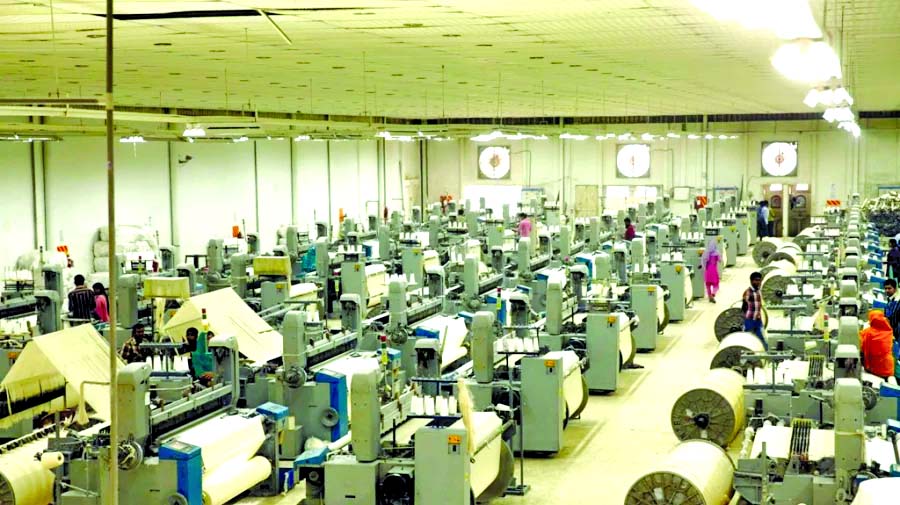
The refinance facility, launched under the central bank’s broader Tk60,000 crore “Production and Employment Resuscitation” package, aims to provide working capital to closed or partially operational factories, helping them restart production, pay workers, clear utility bills and restore supply chains.
Under the scheme, eligible large industrial and service enterprises can borrow up to Tk200 crore at a maximum interest rate of 7%, with a six-month grace period. The loans can be used to pay wages, settle utility arrears, procure raw materials and restart production lines.
However, the central bank has imposed strict eligibility requirements, including a mandatory clean Credit Information Bureau (CIB) record. Firms involved in money laundering, financial fraud, fund diversion or carrying adverse credit classifications will be barred from accessing the facility.
That condition has quickly emerged as the centre of a growing debate.
Industry leaders argue that factories forced to shut down because of financial distress are unlikely to maintain spotless banking records, making the clean CIB requirement fundamentally inconsistent with the purpose of the rescue package.
“The facility is supposed to revive closed factories,” said Mohammad Hatem, president of the Bangladesh Knitwear Manufacturers and Exporters Association (BKMEA).
“A factory that shut down because of a liquidity crisis will naturally face loan repayment difficulties. If a clean CIB report becomes mandatory, many distressed but potentially viable factories will remain outside the scheme.”
Business groups fear the policy could exclude enterprises that need support most urgently while benefiting only those that are already relatively healthy.
Entrepreneurs also questioned the package’s one-year repayment period, arguing that restarting a dormant factory is a long-term process that requires rebuilding supply chains, restoring buyer confidence and rehiring workers.
They say expecting distressed industries to repay large loans within 12 months could create another layer of financial pressure.
Former BGMEA director Mohiuddin Rubel warned that without greater flexibility the package risks failing to reach its intended beneficiaries.
He called for a distinction between fraudulent borrowers and financially distressed but viable enterprises, alongside stronger monitoring systems to prevent misuse of funds.
Economists and business leaders have instead urged the central bank to adopt a more flexible assessment framework that considers a factory’s revival potential, future business plans and owners’ willingness to inject fresh capital rather than relying solely on historical credit records.
Even some banking sector officials acknowledge the challenge.
A senior Bangladesh Bank official, speaking on condition of anonymity, said long-shuttered factories often carry classified loans precisely because they have lacked cash flow for years.
“The reality is that many distressed factories cannot meet conventional lending criteria,” the official said. “A separate evaluation mechanism may be needed to assess whether a factory can realistically be revived.”
The debate comes as Bangladesh struggles with sluggish private investment, rising industrial stress and concerns over employment generation.
While the central bank views the refinance package as a key instrument for industrial recovery, business leaders argue that its success will ultimately depend on whether the financing can reach struggling factories before they collapse permanently.
For now, the rescue fund has created both hope and uncertainty: hope for thousands of workers and entrepreneurs waiting for factories to reopen, and uncertainty over whether the conditions attached to the loans will leave many of those factories locked out of the rescue effort.