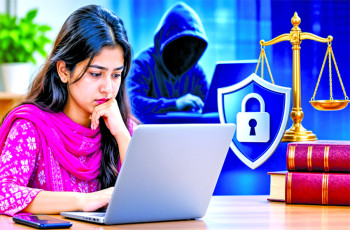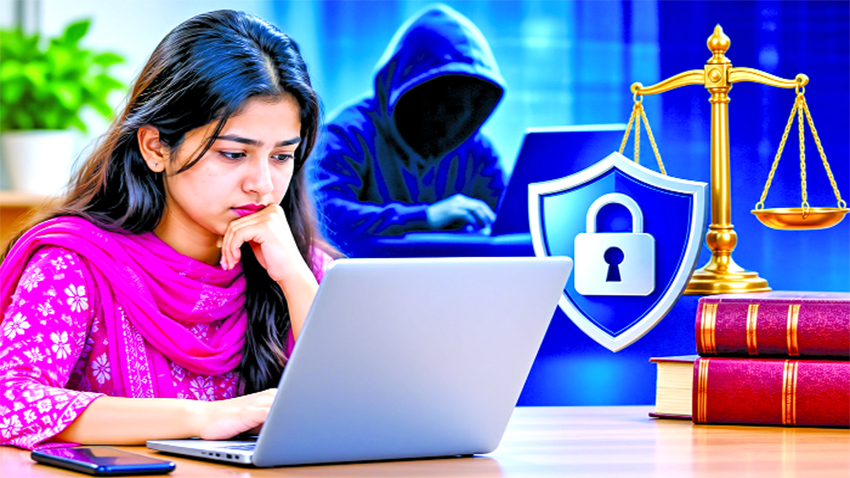
The rapid expansion of digital technology and the easy availability of smartphones have, in recent times, made the safety of women and girls and their vulnerability to cyber violence a serious social and policy concern.
According to recent surveys by the Bangladesh Bureau of Statistics (BBS) and the United Nations Population Fund (UNFPA), as well as observations by human rights organisations, a large proportion of women and young female internet and social media users face online harassment or cyber violence at some point in their lives.
Experts say that while access to education, employment, e-commerce ventures and social interaction has expanded remarkably for women and adolescent girls in the country, insecurity in the virtual world is having a profound adverse impact on their mental health and hindering their digital empowerment.
Emerging risks: AI, deepfakes and gaming platforms
Law enforcement agencies and cyber security analysts say the nature of cybercrime has changed significantly over the past few years. While harassment was once largely confined to password theft or the sending of obscene messages, the misuse of artificial intelligence (AI) technology has now made the situation more complex.
A recent analysis by the Bangladesh Legal Aid and Services Trust (BLAST) has found an alarming rise in incidents involving the use of AI to manipulate women's photographs and create objectionable content (deepfakes), defame them through fake profiles, and extort money or blackmail them by circulating their personal information.
Meanwhile, adolescent girls are also falling victim to cyberbullying and grooming after being lured by unknown networks through online gaming platforms and encrypted messaging apps. Young women aged 18 to 30 and school- and college-going girls are becoming the principal targets of these crimes.
Digital literacy gaps among rural and marginalised women
Those concerned say women and adolescent girls in rural and semi-urban areas are comparatively less aware of digital safety than their urban counterparts. Marginalised women using the internet for the first time often fall prey to fraudsters because they lack knowledge of privacy settings and phishing links.
Women entrepreneurs running small online businesses through Facebook-based commerce (F-commerce) in the hope of achieving economic self-reliance also frequently face page hacking and online harassment.
Reluctance to report and the impact on mental health
Various studies have found that around 75 per cent of women who experience cyber violence do not lodge formal complaints, fearing social stigma, family reprimand and legal complications. In many cases, families even stop affected adolescent girls or young women from using the internet or create obstacles to their education.
Psychiatrists say adolescent girls subjected to online harassment face severe psychological distress, anxiety and loss of self-confidence, and in some cases are exposed to the extreme risk of suicide. It is therefore essential to ensure psychological counselling for victims alongside legal remedies.
Legal protection and penalties
The country has stringent legal provisions to combat online harassment and cybercrime. Under the existing Cyber Security Act (Amended) and the Pornography Control Act, 2012, it is a punishable offence to record someone's private photographs or videos without consent, manipulate them using artificial intelligence, circulate them online, defame someone through a false identity or resort to blackmail.
The Cyber Tribunal can impose imprisonment and substantial fines for such offences, subject to proof. Preserving digital forensic evidence is crucial to ensuring justice for crimes committed through digital platforms. If victims seek legal recourse without fear, it is possible to ensure exemplary punishment for offenders.
Initiatives by the Government, International Organisations and Regulators
The government has taken a range of measures to ensure the online safety of women and children. For the first time, the national and gender budgets for the current 2026-27 fiscal year have identified women's digital safety as a priority sector and announced a ‘zero-tolerance’ policy towards online violence.
The Bangladesh Telecommunication Regulatory Commission (BTRC) and the National Cyber Security Agency (NCSA) are working in coordination with international technology companies such as Meta (Facebook), Google and TikTok to remove objectionable content and fake accounts.
In addition, the United Nations Children's Fund's (UNICEF) four-year Gender Equality Action Plan (2026–2029) places special emphasis on strengthening safe online environments and digital literacy programmes for adolescent girls.
Specialised police support and rmergency assistance
The Bangladesh Police's specialised unit, Police Cyber Support for Women (PCSW), is working continuously to combat cybercrime. Operated entirely by female police personnel, the unit allows women victims to lodge complaints directly while keeping their identities confidential. Many women are reluctant to go to police stations for fear of social stigma. Taking this into account, PCSW provides services online while maintaining complete confidentiality. It receives and resolves numerous complaints and provides technical assistance every day.
Victims can seek direct assistance from PCSW through its hotline (01320000888), email (cybersupport.women@police.gov.bd) or official Facebook page. They can also seek immediate assistance through the national emergency service 999, the government helpline 109 for preventing violence against women and children, and BTRC's short code 2872 for telecommunications-related complaints.
Experts' recommendations and way forward
Cyber security experts believe that law enforcement alone cannot provide a lasting solution to this problem; family awareness and institutional digital literacy are also essential. They say safe internet use should be made a compulsory part of the secondary-level curriculum and parents should be encouraged to treat their children with empathy.
At the individual level, experts recommend enabling two-factor authentication (2FA) on every online account, keeping personal information and photographs private on social media, avoiding clicks on unfamiliar links, and preserving screenshots and URL links as evidence of any harassment.
According to those concerned, there is no alternative to making online platforms safer and more women-friendly in building a secure and inclusive Digital Bangladesh.