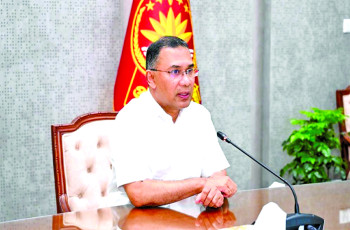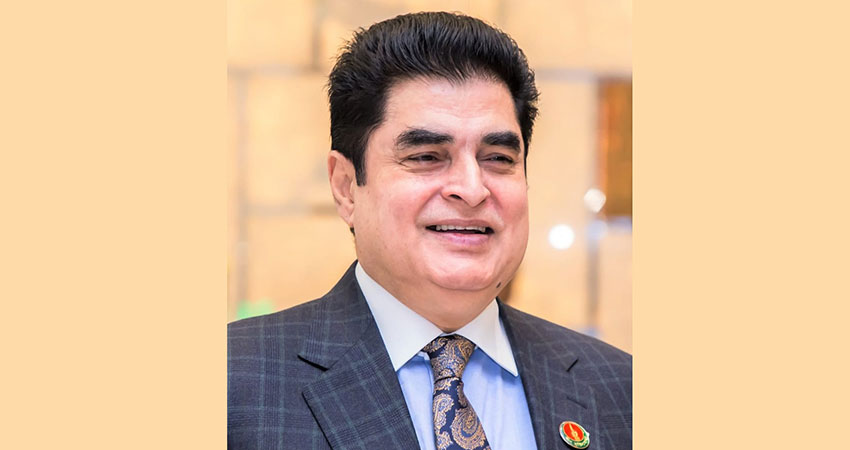
Information and Broadcasting Minister Zahir Uddin Swapon on Saturday said opinions, assumptions or activism is not journalism, while it is conducted based on objective, truth and data-based information.
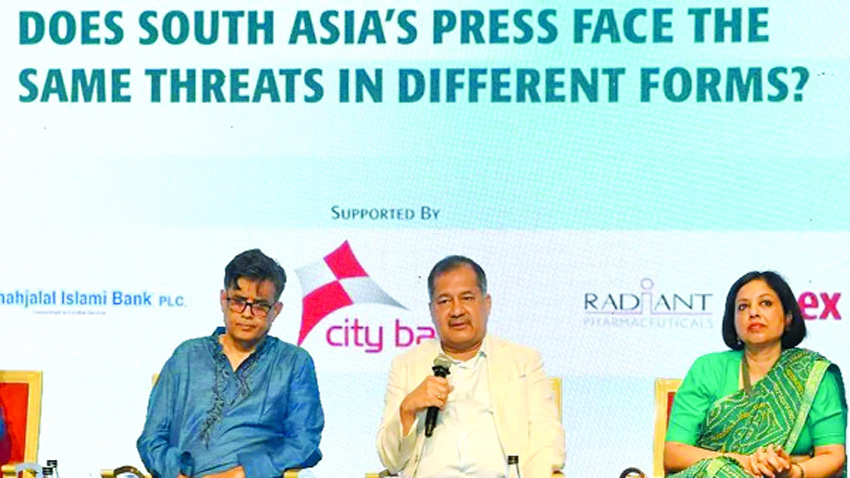
He made the remarks while speaking at a panel discussion of the 'Bengal Delta Conference-2026' here.
The Dacca Institute of Research and Analytics (DAIRA) arranged the conference at a city hotel Saturday morning.
The panel discussion titled ‘Does South Asian Media Face The Same Threats In Different Forms?’ also addressed by Kanak Mani Dixit, founding editor of Himal South Asian, Shafiqul Alam, former press secretary to the chief adviser and editor of Waadaa, and Suhasini Haider, diplomatic editor of The Hindu.
Nazmul Ahsan, executive editor of Netra News, moderated the session.
“Journalists portray the course of events through their own eyes and writing. However, ensuring the objectivity is the most important thing to maintain professionalism,” he said.
Highlighting the existing challenges of the South Asian media, the information minister said in the regional context, the main crises of the media in countries like Bangladesh, India, Nepal and Pakistan are almost the same.
While freedom of speech was the main topic of discussion in the past, in the current era of technology and mobile journalism, the main responsibility of the media has become to protect the commoners from confusion by preventing fake information and misinformation, he said.
Regarding the differences in the general people’s ideas and views on journalism, Swapon said there is no single definition of journalism and it is now much more divided than before.
People's opinions on a given issue may differ in society, but the job of a responsible journalist is to rise above emotions or views and reveal the truth, he said.
The minister said journalists should not be activists as the main responsibility of a journalist is to unveil the truth based on data.
“Without data or specific information, no idea can be news. It is very important to maintain an environment of objective journalism to understand and portray society correctly,” he said.
Safiqul Alam said society and newsrooms have become more divided in the current digital era than in the print or text era. Journalists are constantly facing a struggle for survival and a test of loyalty, he said.
He said in the 80s and 90s, the media was controlled through newspaper shutdown or censorship, and now the entire newsroom or journalists are influenced through various privileges and temptations.
“Text-based journalism is shrinking except for certain categories and video-based digital media is taking its place,” he added.
Suhasini Haider said the media has many responsibilities, but journalists basically have to stay away from three things.
First, he said, journalists are not spokespersons of the government or partners of power and second, journalists are not activists or agitators since their job is to analyze and present the truth.
“Thirdly, journalism is not entertainment; the job of news is to inform and make people aware,” she said.
Regarding the perspective of journalists in the South Asian region, Suhasini said in the past few years, there has been a certain lack of understanding in South Asia and regional communication has decreased.
Besides, Zahir Uddin Swapon attended the 'Global Conference on AI Leadership and Flagship Prestige Awards 2026' event as the chief guest at another city hotel this afternoon.
Stating that Bangladesh needs to move forward in line with the rapid changes in technology around the world, the information minister told the function that artificial intelligence or AI technology should be effectively utilised to increase performance and efficiency.
“Because working with AI in line with the modern era is the demand of the time,” he said.
At the conference, technology experts, policymakers, researchers and academics from home and abroad spoke in various sessions on AI, digital leadership, good governance, cybersecurity and global cooperation.
The daylong conference held a wide-ranging discussion on the possibilities and challenges of artificial intelligence and honored distinguished individuals for their special contributions to AI technology.
SM/CitizenTimes