Iranian support, years of warfare and advances in missile and drone capabilities have transformed the Houthis into a powerful force capable of disrupting Red Sea shipping and targeting regional infrastructure.
Yemen’s Houthi movement has evolved from a small mountain militia into a formidable military force capable of threatening regional security and disrupting vital international shipping routes.
The group’s rapid advance in Yemen has brought the strategically important Bab el-Mandeb Strait under its control, giving the once-ragged highland militia significant regional influence.
The Houthis have developed increasingly sophisticated missile and drone capabilities with support from Iran and Lebanon’s Hezbollah, allowing them to strike targets hundreds of kilometres from Yemen.
Who are the Houthis?
The Houthis emerged in the late 1990s as a Zaydi Shi’ite Muslim revival movement in northern Yemen under the Houthi family. The group fought six wars against the Yemeni government, gradually building a strong local militia.
When Yemen’s central government weakened during the 2011 Arab Spring, the Houthis expanded their territorial control and developed closer ties with Iran and its Lebanese ally Hezbollah.
In 2014, the group seized the capital, Sanaa, ousting the government and derailing a Gulf-backed political transition. Saudi Arabia subsequently led a military intervention in support of the government, triggering years of civil war that eventually reached a stalemate before a ceasefire in 2022.
During Israel’s war in Gaza from 2023 to 2025, the Houthis launched missiles and drones at Israel and international shipping in the Red Sea, saying the attacks were carried out in solidarity with Palestinians.
With their main ally Iran coming under US attack from February 28, the Houthis have again targeted Red Sea shipping and energy facilities inside Saudi Arabia.
Fighting resumes inside Yemen
The ceasefire has collapsed in recent weeks, with fighting resuming along former front lines in the northern governorates of Marib and Jawf, the southern highland city of Taiz, central Yemen’s Dhale and the Red Sea coastal region known as Tihama.
Last week, the Houthis rapidly advanced into southern Tihama, capturing the port city of Mocha and subsequently taking control of the rest of the Red Sea coastline and islands.
The advance has allowed the group to position its weapons along the entire shore of the 12-mile (19km) wide Bab el-Mandeb Strait.
The territorial gains could make it easier for the Houthis to disrupt shipping in the Red Sea, a key route for Saudi oil exports to Asia, while also providing a potential launchpad for a ground offensive towards Aden.
Saudi Arabia has carried out airstrikes in support of forces aligned with Yemen’s government.
Houthi missile and drone capabilities
The Houthis’ growing ability to conduct long-range strikes with increasing accuracy has made the group a regional security concern.
Houthi ballistic missiles have reached Israel, more than 1,000 miles (1,800km) away. One missile struck the perimeter of Israel’s main airport in 2025.
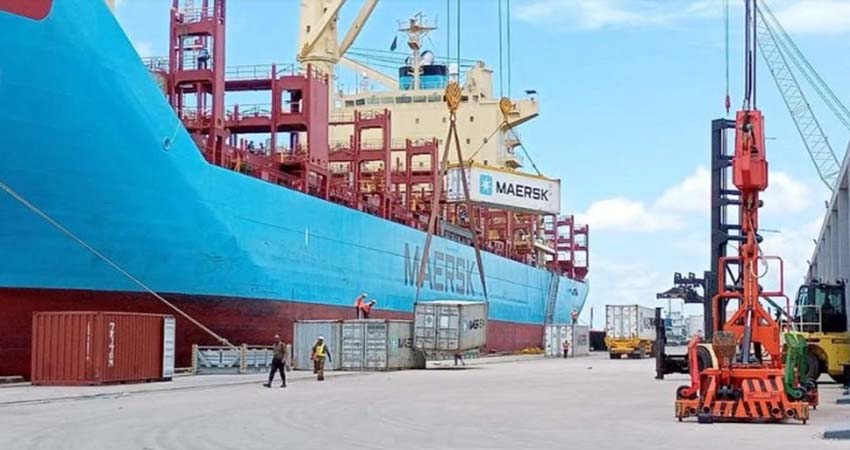
The group has also launched increasingly frequent attacks against targets in Saudi Arabia, including cities and infrastructure. Houthi missiles have additionally been fired at ships in the Red Sea, disrupting maritime traffic.
Houthi drones have repeatedly targeted Saudi targets and are now being deployed more extensively on the battlefield, representing a significant change from the previous phase of Yemen’s civil war before the 2022 ceasefire. Weapons and military equipment
Videos released by the Houthis since the beginning of September show some of the military equipment used by the group.
The footage shows drones dropping different types of mortar rounds and other bombs on vehicles and opposition fighters. Other videos show rockets or missiles being launched and precision strikes on buildings and trucks at a military camp, apparently filmed by a high-resolution drone.
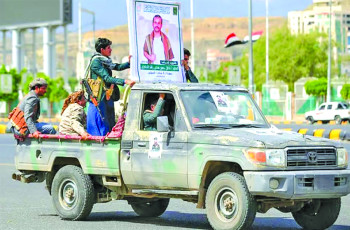
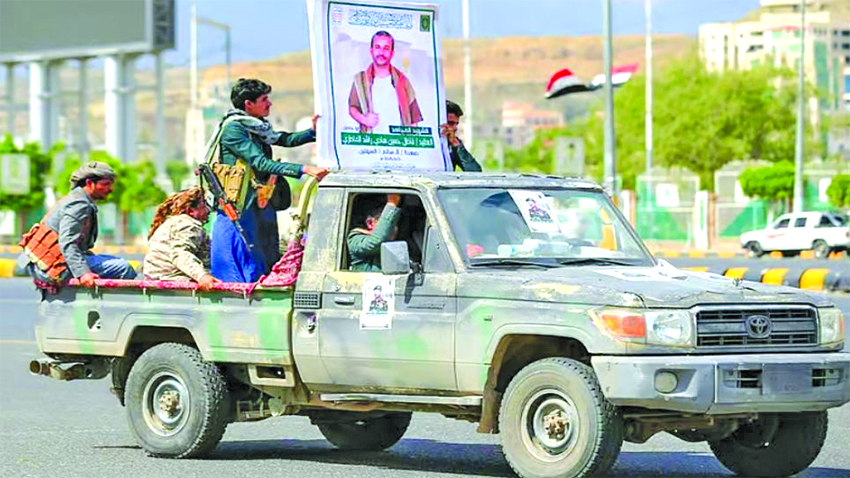
Houthi fighters are also shown travelling in pickup trucks, some fitted with weapons, and moving on foot. Many wear traditional Arab robes rather than military uniforms and carry assault rifles, while one video shows a small group wearing camouflage uniforms.
The footage also shows fighters using light and heavy machine guns and scoped rifles.
Other videos show equipment captured from Saudi-backed forces in Tihama, including armoured and combat vehicles, a tank, an artillery gun, a satellite dish, small arms and a drone-jamming device. The footage does not generally show the captured equipment being used in combat.
How do the Houthis obtain weapons?
A 2025 report by a United Nations panel of experts said the Houthis had developed missile and drone technologies through a combination of technical assistance and domestic manufacturing.
The report also found widespread arms smuggling despite a UN arms embargo, including shipments transported overland across the Omani border and by sea.
Seized equipment included drone-control devices, systems capable of receiving ships’ navigational data, drone engines and missile components. A 2023 UN report also documented seizures of complete drones, ballistic missile components, including chemical precursors, and Iranian-made anti-tank missiles.
Iranian sources have said Tehran has supplied weapons and experts to its Houthi allies. Iran, however, has officially denied arming the group in violation of the UN arms embargo.
A 2025 assessment by the International Institute for Strategic Studies found that while the Houthis had made progress in domestic arms production, they remained dependent on Iran for key technologies and advanced capabilities.
Training and military organisation
According to the UN panel of experts, Houthi military tactics have focused on infiltration, drone attacks and shelling along front lines, as well as laying mines and other explosive devices.
The experts estimated that the group had 350,000 fighters, including some recruited from under the age of 18.
Yemen analysts say training provided by Iran and Hezbollah has played a critical role in the Houthis’ military development.
Baraa Shiban, an associate fellow at the Royal United Services Institute in London, said such training began soon after the Arab Spring and helped transform the Houthis from a militia into a more organised military force, including changes to their structure and battlefield movements.
Hezbollah missile and drone operatives were present with the Houthis in 2025, according to the UN experts. Iranian Qods Force General Abdolreza Shahlaei also spent time in Yemen working with the Houthis, they said.