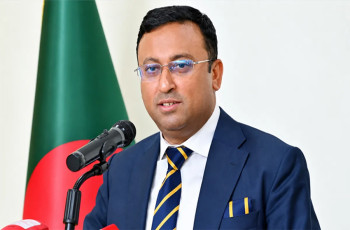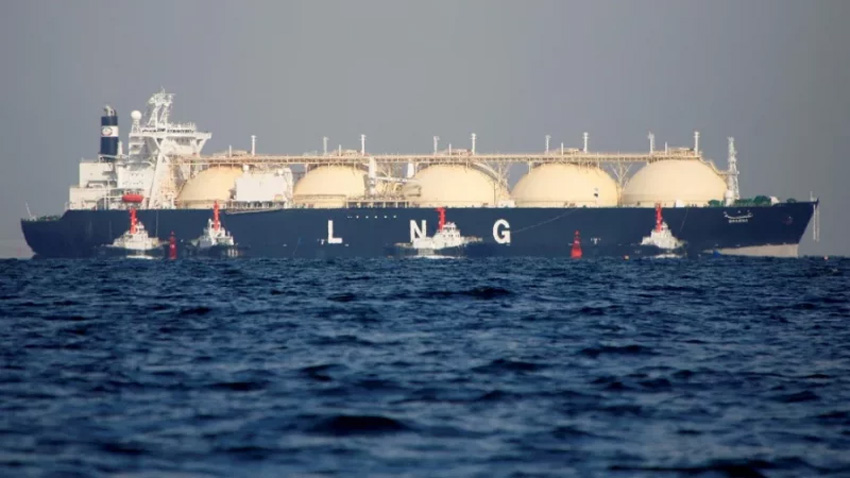
Power, Energy and Mineral Resources Minister Iqbal Hassan Mahmood on Monday said the country's damaged Floating Storage and Regasification Unit (FSRU) is expected to resume operations within the next 10 to 15 days, easing the gas supply crunch caused by disruptions to liquefied natural gas (LNG) imports.
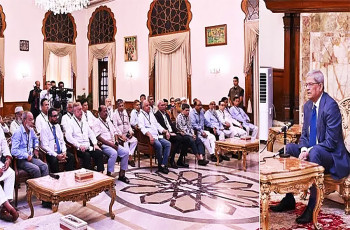
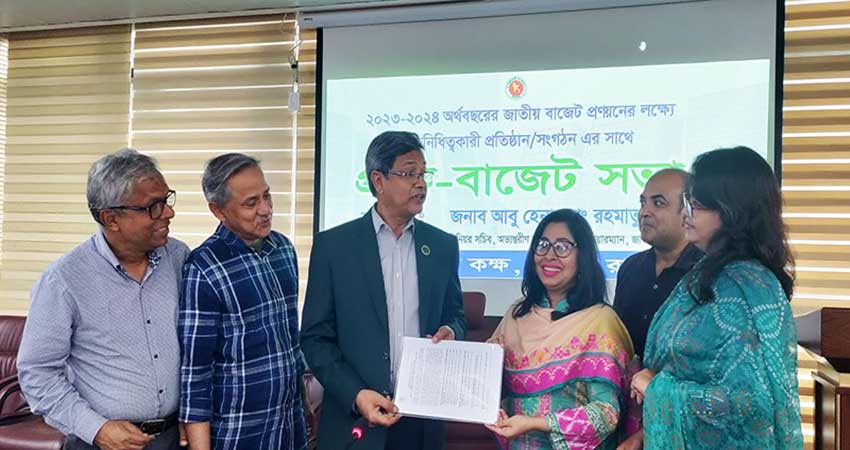
A fire broke out at one of Bangladesh's two FSRUs about a week ago, forcing the suspension of LNG regasification, the minister said at a policy roundtable titled “Navigating Global Shifts: Fostering Energy Security and Resilience in Bangladesh."
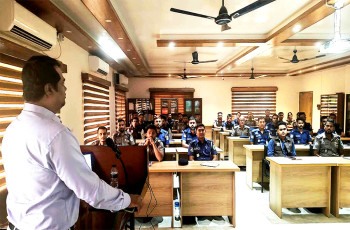
Bangladesh Institute of Peace and Security Studies (BIPSS) organized the roundtable.
"Fortunately, it was not a major disaster, but the unit is now under repair. It will take another 10 to 15 days to complete the repairs," he said.
The disruption has left two LNG cargoes waiting offshore as they cannot be unloaded until the FSRU resumes operations, Mahmood said.
"As a result, there is a serious gas shortage across the country. People are complaining about low gas pressure in their homes, while industries and power plants are also suffering," he said.
The minister said the country's power sector remains heavily dependent on natural gas, while alternative fuels such as LNG and coal are largely imported.
Many gas-fired power plants remain idle because of fuel shortages, even as the government continues to make capacity payments to private power producers, he said.
Mahmood said Bangladesh imported fuel worth about $3.65 billion over the past six months, putting pressure on foreign exchange reserves as global prices of gas and other fossil fuels remain high.
He also blamed mounting financial stress in the power sector on unpaid liabilities inherited from the previous government.
"The government inherited around Tk56,000 crore in unpaid dues to private power producers, while continuing to meet current subsidy obligations every month," he said.
To reduce dependence on imported fossil fuels, the minister said the government has stepped up efforts to expand renewable energy generation.
Bangladesh has adopted a new renewable energy policy targeting the addition of 10,000MW of renewable power generation capacity over the next five years, he said.
Calling the target ambitious but achievable, Mahmood said the government plans to promote utility-scale and rooftop solar projects through greater private sector participation.
Under the proposed rooftop solar model, private investors will install solar panels on rooftops, recover their investment through net metering and receive payments based on electricity supplied to the national grid.
He said the government also plans to establish cluster-based solar parks by allocating land to investors, while the Power Grid Company of Bangladesh (PGCB) will purchase the electricity generated.
Negotiations with prospective investors are underway, and land allocation for new solar projects is expected to begin in August, he added.
Mahmood said battery energy storage systems would play a key role in the renewable energy transition by allowing surplus daytime solar power to be used during evening peak demand.
"If we can achieve the target of 10,000MW in five years, life will become much easier in the energy sector," he said.
BIPSS President Major General ANM Muniruzzaman (retd) gave the welcome address.