New analysis shows children
disproportionately affected by heat stress driven by climate change now and
into the future, posing severe risks to their health and development.
The study, “Age-specific
exposure to human-induced increases in humid heat’’ was led by the Water and
Climate Department of Vrije Universiteit Brussel, with researchers from ETH
Zurich, the University of Oxford, the University of Waikato and the Potsdam
Institute for Climate Impacts Research.
“The capital city of Bangladesh is Dhaka,
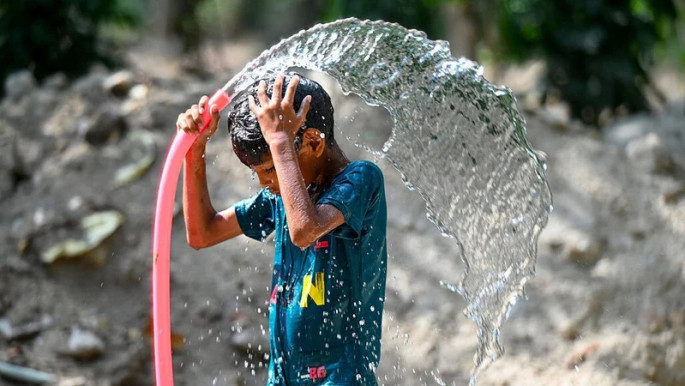
Climate change is already exposing millions of
children in Bangladesh to additional dangerous heat stress, with 22 million
children aged 0–9. Around 79% of all children in this age group are
experiencing at least one additional month of heat stress every year because of
human-induced climate change, according to new research led by Vrije
Universiteit Brussel (VUB) and published in Science Advances.
The analysis also finds that
climate change has nearly tripled the number of Bangladeshi children aged 0–9
experiencing at least five total months (150 days) of dangerous heat stress
each year, increasing the number from 9 million in a world without climate
change to 26 million today which is equivalent to 91% of children in this age
group.
The findings place
Bangladesh within a wider South Asian crisis. Across South Asia, 167.4 million
children aged 0–9, about 62% of children in the age group are currently exposed
to at least one additional month of heat stress attributable to climate change.
Climate change has also doubled the number of children in the region
experiencing at least five total months of dangerous heat stress, from 80
million to 156.6 million.
The youngest are facing the
greatest risk
Globally, the study
estimates that up to 560 million children aged 0–9, 43% of children in this age
group are currently experiencing at least one additional month of heat stress
each year due to human-induced climate change. This exposure is higher than for
any other age group.
Children are particularly
vulnerable to extreme heat because their bodies heat up faster than adults,
they sweat less efficiently and they depend on adults for protection. Excessive
heat can cause dehydration and heatstroke, aggravate existing health conditions
and affect learning and cognitive development.
The study focuses on humid
heat, measured using a wet-bulb globe temperature threshold above 28°C in the
shade. Humid heat is particularly dangerous because high humidity prevents the
body from effectively cooling itself through sweating.
Bangladesh faces an
escalating future threat
The analysis shows that
Bangladesh's current exposure could become even more widespread under further
global warming.
Under a 1.5°C warming
scenario, 23 million Bangladeshi children (87%) are projected to experience at
least one additional month of heat stress each year, while 25 million (93%)
could experience at least five total months of heat stress.
Under a 2°C warming
scenario, the share of children exposed to at least one additional month of
climate-change-driven heat stress is projected to rise to 98%, with 97%
projected to experience at least five total months of heat stress.
These projections underscore
the growing importance of preparing Bangladesh's health, education and social
protection systems for prolonged periods of extreme heat — while rapidly
reducing the fossil fuel emissions driving further warming.
A call for urgent climate
and health action
The researchers warn that
children in developing countries face disproportionate exposure to climate
extremes, while poverty, inadequate housing, limited access to cooling and
overstretched health systems can leave children with fewer ways to cope with
extreme heat.
“Climate change is already
causing hundreds of millions of children to suffer from dangerous heat
worldwide, posing severe risks to their health. Children in developing
countries face disproportionate exposure to climate extremes now and into the
the future,” said Rosa Pietroiusti, lead author of the study and PhD researcher
at VUB.
Dr. Shimul Mazumdar, Senior
Consultant (Child), General Hospital, Comilla said “The impact of intense heat,
worsened by climate change is becoming increasingly evident among children.
Issues such as sudden vomiting, excessive fatigue, restlessness, and a loss of
appetite being observed much more frequently.”
For Bangladesh, the findings make clear that extreme heat is not simply an environmental concern but an increasingly urgent child health, education and development challenge. Protecting children will require stronger heat-health preparedness, targeted adaptation measures, resilient public services and accelerated action to reduce the emissions driving climate change.