Bangladesh's economy has crossed the $500 billion milestone for the first time.
According to the preliminary estimates of the Bangladesh Bureau of Statistics (BBS), the country's gross domestic product (GDP) stood at $501 billion in FY26.
According to BBS data released on Wednesday, the size of the country's economy was $456 billion a year ago.
Accordingly, the size of the economy has increased significantly in a year.
The country's overall economic growth in the current fiscal year was 4.14%, which is higher than the 3.49% in the previous fiscal.
Although various international organizations had predicted that Bangladesh's growth in the current fiscal would be below 4%, the preliminary estimates of BBS have exceeded that forecast.
Sector-wise, it can be seen that the positive growth of the agriculture and services sectors has played an important role in advancing the overall economy. vulnerabilities in the economy and could affect long-term growth momentum.
On GDP reaching $501 billion, Professor Sayema Haque Bidisha of the Economics Department at the University of Dhaka said, "An increase in the size of GDP and per capita income is certainly a positive development. It indicates that the economy is gradually recovering. However, we should not focus solely on the size of growth; we must also examine how widely the benefits of that growth are being distributed."
She added that political and economic stability play a crucial role in attracting investment, as investors generally seek environments that offer stability and predictability.
On GDP growth, Bidisha said overall growth is a positive sign, but the country's objective should be to ensure growth that is sustainable, inclusive and employment-oriented, particularly through the manufacturing sector.
"GDP growth is undoubtedly an important indicator. But even more important is the quality of that growth. We need to understand how the growth is being generated, which sectors are driving it, and how much of its benefits are reaching ordinary people," she said.
She stressed that growth should not be evaluated solely based on numbers. "Rather, we should assess whether the growth is inclusive. A slight increase or decrease in growth in a single year is not a major issue; what matters is the long-term structure of growth and its overall impact."
Professor Bidisha noted that expecting very high growth in the agricultural sector is not realistic because the sector operates within natural constraints.
However, she said the overall increase in growth is a positive signal for the economy and suggests that economic activities are gradually regaining momentum.
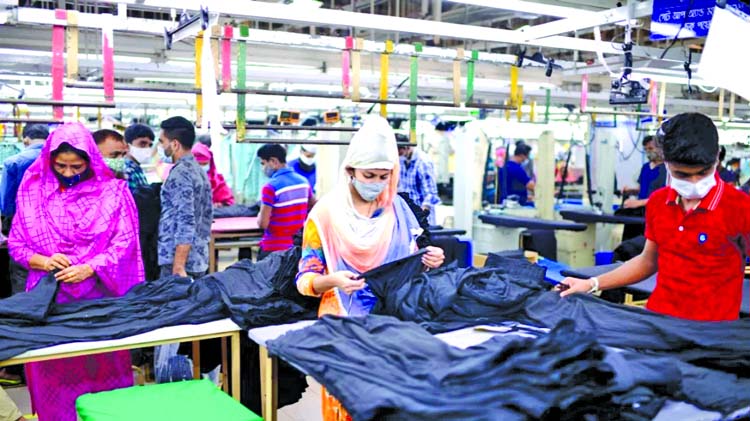
The professor expressed particular concern over the slowdown in industrial growth, especially in the manufacturing sector.
"For a country's structural economic transformation, the manufacturing sector is extremely important. A significant share of future growth is expected to come from this sector. Therefore, a slowdown in manufacturing growth should serve as a warning sign for us," she said.
Professor Bidisha further noted that the sluggish pace of private-sector investment and the negative trend in manufacturing deserve serious attention from policymakers, as these sectors serve as the primary driving forces of the economy.
Emphasising the link between growth and employment, she said, "Employment is the main channel through which the benefits of growth reach ordinary people. However, past experience shows that job creation has not kept pace with economic growth, particularly in the industrial and service sectors. As a result, even when growth occurs, its benefits do not reach everyone."
She said future policymaking should prioritise forms of growth that generate employment opportunities and help reduce income inequality.
SM/CitizenTimes