As Bangladesh battles its worst measles outbreak in decades, preliminary research has found no evidence that the virus has evolved to evade protection from the existing measles vaccine, easing fears that a vaccine-resistant strain is driving the epidemic.
Instead, researchers say the outbreak appears to be fueled by immunity gaps, with the youngest infants, too young to receive their first routine vaccine dose, and unvaccinated children accounting for the overwhelming majority of confirmed infections.
The findings, released by researchers from the International Centre for Diarrhoeal Disease Research, Bangladesh (icddr,b) and Bangladesh Shishu Hospital and Institute (BSH&I), come as the country continues to record thousands of infections and hundreds of deaths.
According to the Directorate General of Health Services (DGHS), Bangladesh reported 122,763 suspected measles cases and 15,272 laboratory-confirmed infections between March 15 and July 25 this year.
During the same period, 721 suspected and 95 laboratory-confirmed measles-related deaths were recorded.
The scale of the outbreak has prompted public concern that the virus may have mutated enough to render existing vaccines ineffective.
However, genomic sequencing and laboratory analysis found no evidence to support that belief.
Researchers identified the circulating virus as belonging to the B3 genotype, the same strain responsible for outbreaks in several other countries, and found no indication that it had genetically escaped vaccine-induced immunity.“Our findings provide no evidence that the virus has escaped vaccine protection,” said Dr Noorjahan Maliha, associate scientist at icddr,b’s Virology Laboratory. Although a small number of fully vaccinated children were infected, she said the hospital-based investigation was not designed to measure overall vaccine effectiveness and should not be interpreted as evidence that the vaccine is failing.
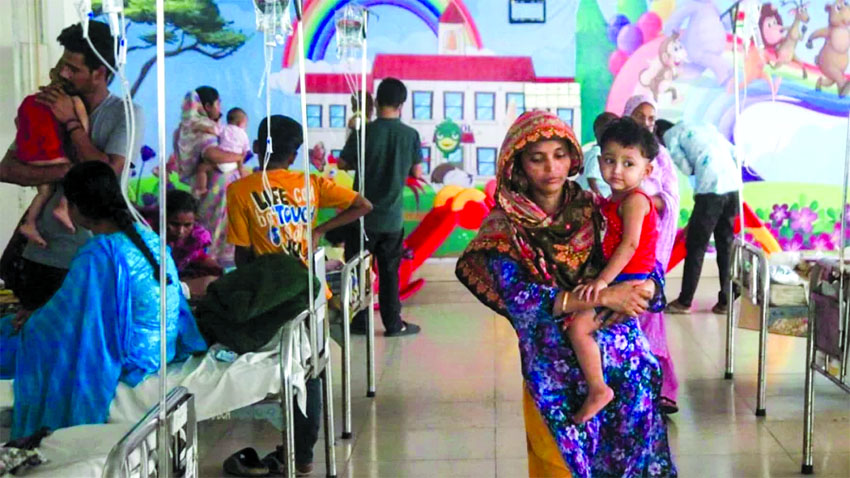
The investigation examined 341 children aged up to 14 years admitted with suspected measles to Bangladesh Shishu Hospital between April 20 and May 21.
Laboratory testing confirmed measles in 324 of them.
The highest infection rates were recorded among children with little or no vaccine protection.
Among infants younger than nine months, who are too young to receive Bangladesh’s first routine measles-rubella vaccine, 97% tested positive.
The same positivity rate was observed among eligible children who had received no vaccine.
The proportion gradually declined among vaccinated children. It fell to 92% among those who had received one dose and 76% among those who had received both recommended doses.
Researchers stressed that these figures relate only to children already admitted to hospital with suspected measles and should not be interpreted as infection rates among all vaccinated children.
Instead, the progressively lower positivity among vaccinated children is consistent with the vaccine providing meaningful protection, although larger population-based studies will be required to determine precisely how effective it has been during the current outbreak.
The findings also highlight a critical period of vulnerability among infants.
Bangladesh administers the first routine measles-rubella vaccine at nine months and the second at 15 months.
Before that, babies rely largely on antibodies transferred from their mothers.
An initial analysis of stored blood samples from an earlier icddr,b birth cohort found maternal antibodies declined rapidly during the first months of life.
In the small group studied, no protective antibodies remained between three and eight months of age, suggesting many infants may become susceptible well before reaching the age for routine vaccination.
Researchers cautioned that the sample was too small for firm conclusions and said broader studies are underway.
Dr Mustafizur Rahman, senior director of icddr,b’s Infectious Diseases Division, said the findings suggest Bangladesh should focus less on fears of viral mutation and more on understanding why such a large outbreak occurred despite relatively high reported vaccination coverage.
“We need to determine why children miss vaccination and whether reported national coverage conceals communities with substantial immunity gaps,” he said.