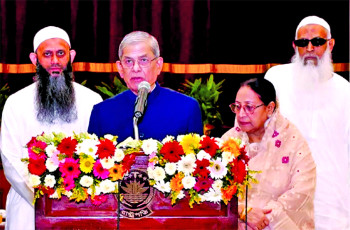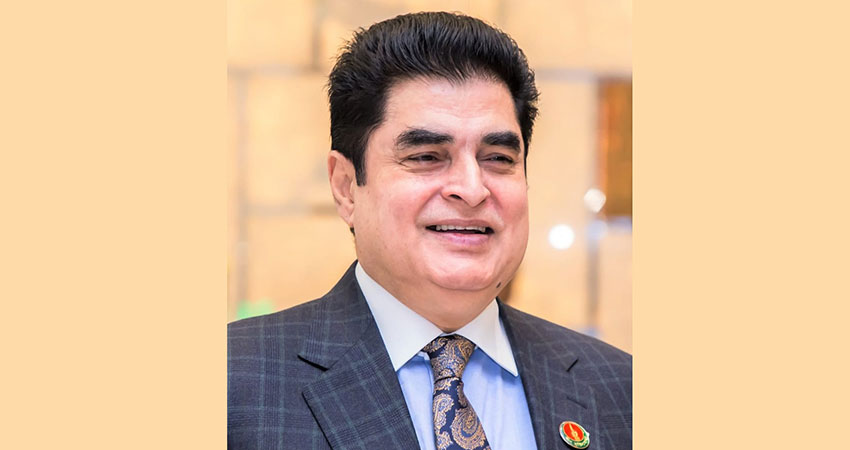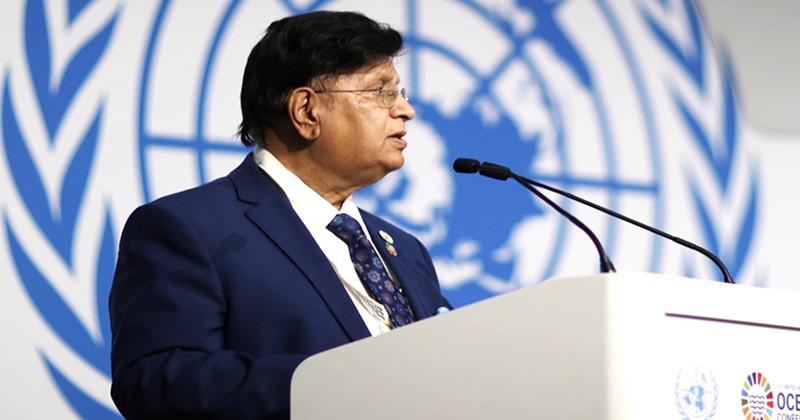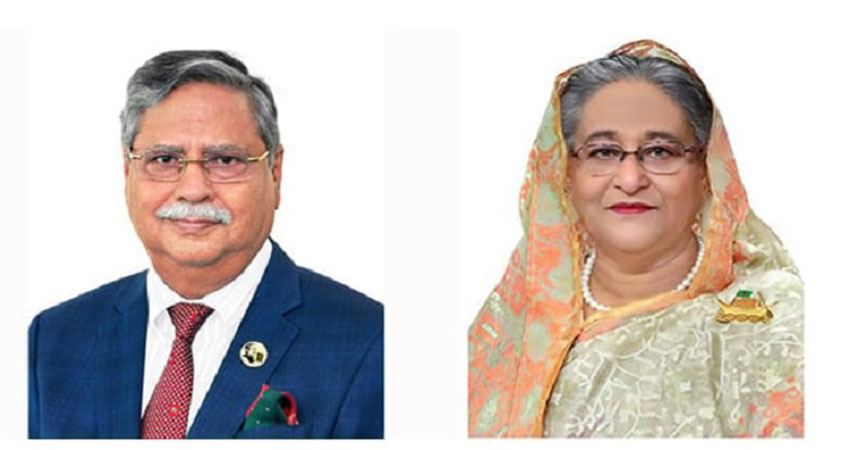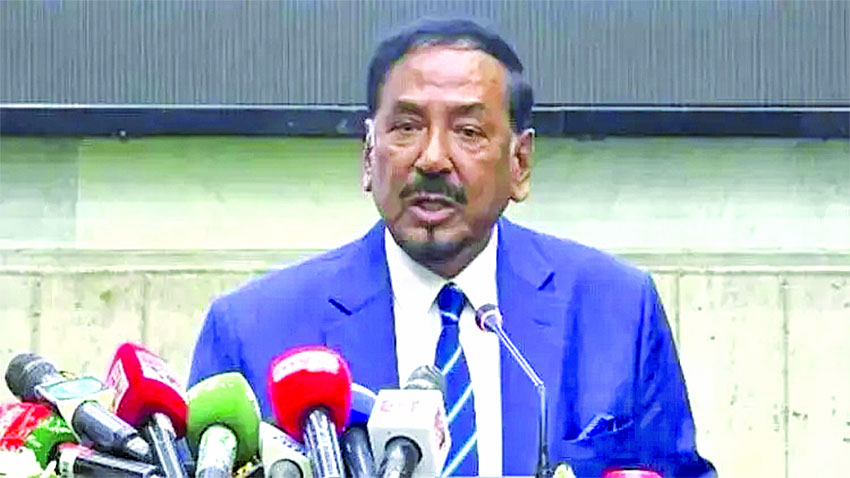
The Liberation War of 1971 was not a war fought for any political party but a people’s war for democracy, voting rights, human dignity and equal rights, Acting President Major (retd) Hafiz Uddin Ahmad Bir Bikram said.
He made the remarks while speaking at the 54th Commissioning and Fellowship Day of the Bangladesh Liberation War Courses, held at the Kurmitola Golf Club in Dhaka Cantonment on Friday,
He said the war began after the Pakistani ruling authorities ignored the people’s electoral mandate and trampled on democracy.
“The Liberation War was a war of the people and a struggle to establish democracy, voting rights, human dignity and equal rights,” he said.
Hafiz Uddin said many events, sacrifices and acts of bravery during the Liberation War had not been properly recorded in history as successive governments after independence had often failed to present the true picture of the war before the people.
“There has been an attempt to establish the idea that the country became independent through only a few speeches. But in reality, countless young people, sons of ordinary families and soldiers sacrificed their lives for independence,” he said.
Hafiz said the Liberation War was a struggle to establish a democratic, humane and discrimination-free Bangladesh based on equal rights.
He urged the younger generation to learn how Bangladesh achieved independence and understand the aspirations of the freedom fighters.
“They should work to fulfil those aspirations and build a happy, prosperous and democratic Bangladesh,” he said.
The acting president also warned against the emergence of another autocratic regime in the country.
“If a government makes mistakes, the people will correct them through democratic means. But under no circumstances should the democratic system be destroyed,” he said.
Recalling the resistance during the Liberation War, Hafiz said patriotism and sacrifice were the greatest strengths of the freedom fighters.
He said many young people who were initially considered physically unfit for combat broke down in tears and pleaded for an opportunity to join the war. Some even lay in front of military vehicles to prevent themselves from being left behind, he added.
“These scenes are an unforgettable and glorious chapter in the history of our Liberation War,” he said.
Hafiz said the Pakistani rulers had shown no respect for the people’s electoral mandate. Although people in the then East Pakistan had voted in the 1970 election in favour of regional autonomy based on the Six-Point demand, the ruling authorities ignored the result.
He said the resistance mounted by members of the East Bengal Regiment and the East Pakistan Rifles against Pakistani forces in March 1971 was crucial to the course of the Liberation War.
According to him, battalions of the East Bengal Regiment in different cantonments built resistance, while thousands of students and young people joined the war under the leadership of a limited number of soldiers. He said around 80,000 young people eventually joined the Liberation War in response to calls from about 5,000 soldiers, with the number of freedom fighters later reaching nearly one lakh.
Soldiers and officers of the East Bengal Regiment and the EPR trained the young recruits and prepared them for the war, he said.
Hafiz also recalled the contribution and leadership of late president Ziaur Rahman during the Liberation War, saying Major Zia’s declaration of independence inspired the nation. He said Zia had made the declaration on behalf of Sheikh Mujibur Rahman.
Major A Matin Chowdhury delivered the welcome address at the programme.
Chief of Army Staff General Waker-Uz-Zaman, Chief of Air Staff Air Chief Marshal Hasan Mahmood Khan and Chief of Naval Staff Vice Admiral Khandoakr Misbah Ul Azim also spoke at the event.
Liberation War Affairs Minister Ahmed Azam Khan attended the programme as a special guest.
SM/CitizenTimes