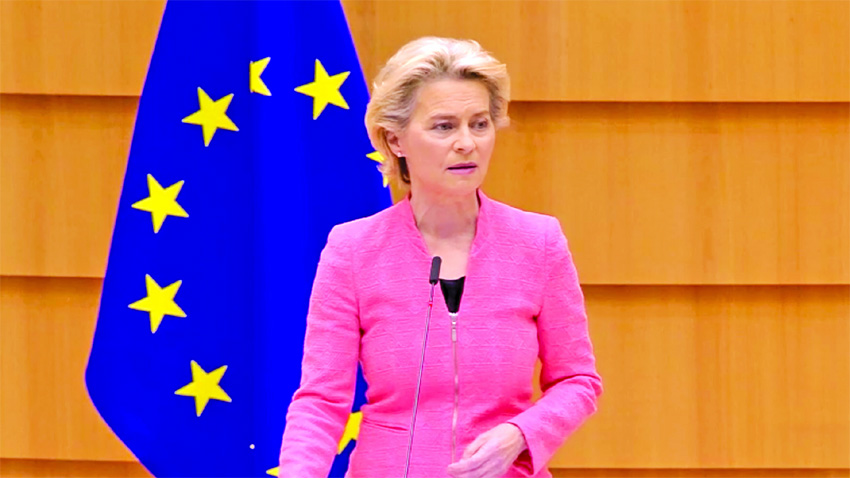
European Commission President Ursula von der Leyen on Monday called for possible age restrictions on children's use of social media as an EU advisory panel recommended blocking access for users under 13 until technology companies can prove their platforms are safe.
The debate comes amid growing global concerns over the impact of social media on children's mental and emotional development. Several countries, including Australia, the United Kingdom, Turkey and Indonesia, have introduced or approved measures restricting access to platforms such as TikTok, YouTube and Instagram for younger users.
Von der Leyen, who trained as a physician, said children below the age of three should not have any exposure to screens. She suggested that access to digital platforms should be introduced gradually depending on children's age and maturity.
“Childhood won’t wait and once it’s gone, we can never give it back,” she told reporters, stressing the need for legal limits on when children can use social media.
Drawing a comparison with existing rules on driving and alcohol consumption, she said society sets age limits for activities that require maturity and should similarly determine when children can access social media.
Von der Leyen highlighted features such as endless scrolling as examples of potentially addictive designs that technology companies need to address.
Although she did not propose a specific age limit beyond restrictions for very young children, the European Commission is expected to prepare recommendations for consideration by the EU's 27 member states. Her policy initiatives often influence discussions among EU governments.
The EU panel tasked with examining online child safety submitted its report to von der Leyen on Monday. It said technology companies, rather than regulators, parents or children, should bear responsibility for proving that their services are safe.
SM/CitizenTimes
“Until they demonstrate that their services are safe by design, social media and other digital services providers should have restricted access to children under the age of 13 in the EU,” the report said.
The panel also recommended that EU member states consider additional precautionary age limits for children older than 13 to further protect young users online.